
When a knee needs a professional look
Most knee trouble settles on its own, and the sensible first step is ordinary self-care. Some of it doesn't. This page is about telling the difference, and about what a normal recovery timeline looks like, so you're not ignoring something that needs attention or worrying about something that doesn't.
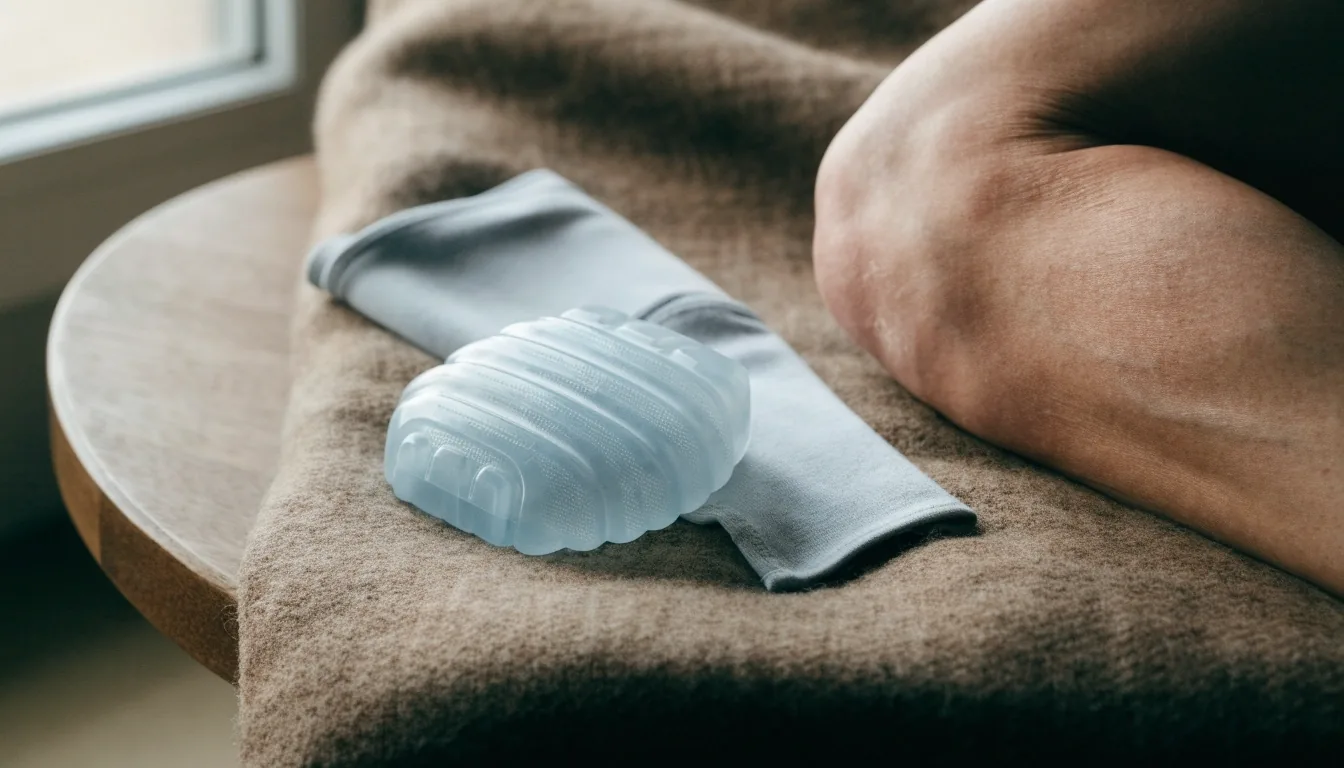
A knee that's hot, swollen or won't take your weight belongs with a professional, not a heat pack.
The warning signs worth acting on
A handful of things should send you to a GP rather than a heat pack. Swelling that comes on quickly, a knee that's hot or red, pain that's severe, or a knee that won't take your weight. NHS pathway documents use those exact signs to decide who needs a closer look, and they're a useful checklist to keep in mind.
Add any knee trouble that started after a fall, a twist or a knock, and any knee that locks or gives way. None of it means something terrible is going on. It means home management isn't the right first step this time, and an appointment moves things forward faster than another fortnight of waiting.
- Swelling that appears quickly, or a knee that feels hot or looks red
- Severe pain, or a knee that won't bear your weight at all
- Anything that started after a fall, a twist or a knock
- A knee that locks, catches, or gives way under you
Recognising these early is the whole point of this page.
How long it should take to settle
Slow improvement is the good sign
NHS self-care guidance says most knee pain resolves within 6 to 12 weeks without specific treatment, and NHS TIMS advice notes that flare-ups often begin to settle within 6 weeks. That's a useful frame to hold onto. A knee that's still improving slowly at week three is probably on track, even if it isn't fine yet.
Getting worse is the reason to ring
The other side of it: if pain is getting worse rather than better, or hasn't improved after 3 to 4 weeks, that's a reason to contact your GP. The timeline matters because it tells you when to be patient and when to stop being patient. Most people who get checked at that point find the conversation short and reassuring.
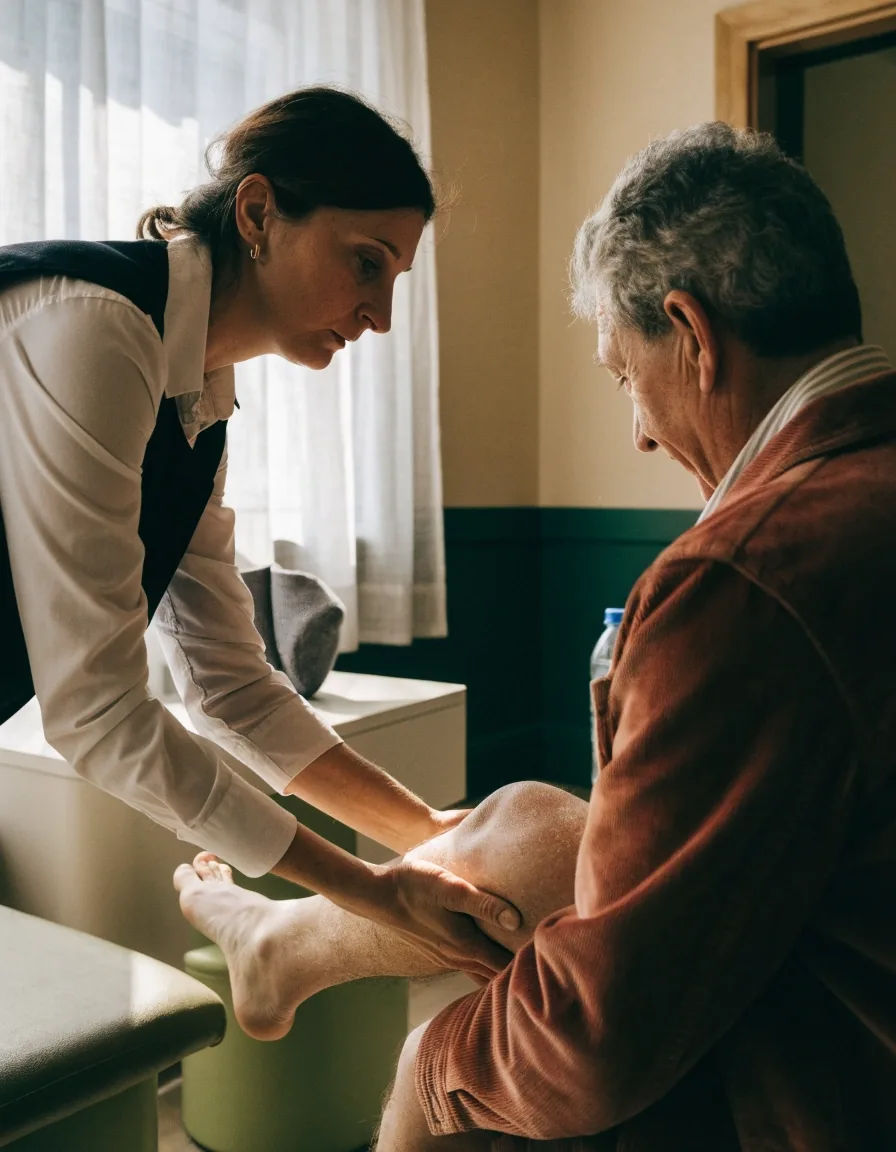
What a GP visit usually involves
You won't be sent straight for anything dramatic. UK care pathways lean heavily on conservative management first, which means advice, exercise and, where relevant, physiotherapy. The DGFT pathway document states that patients should have positively attempted conservative management except in exceptional circumstances, and it lists appropriate exercises and physiotherapy exercises among the measures.
That's the reality for most people: a conversation, some guidance, and a review rather than a referral. If you've already been doing the sensible things, saying so helps, because it moves the conversation forward and saves a second appointment to cover ground you've already covered.
Other things a GP might raise
Some conversations go beyond the knee itself. It's worth knowing what else might come up before you sit down.
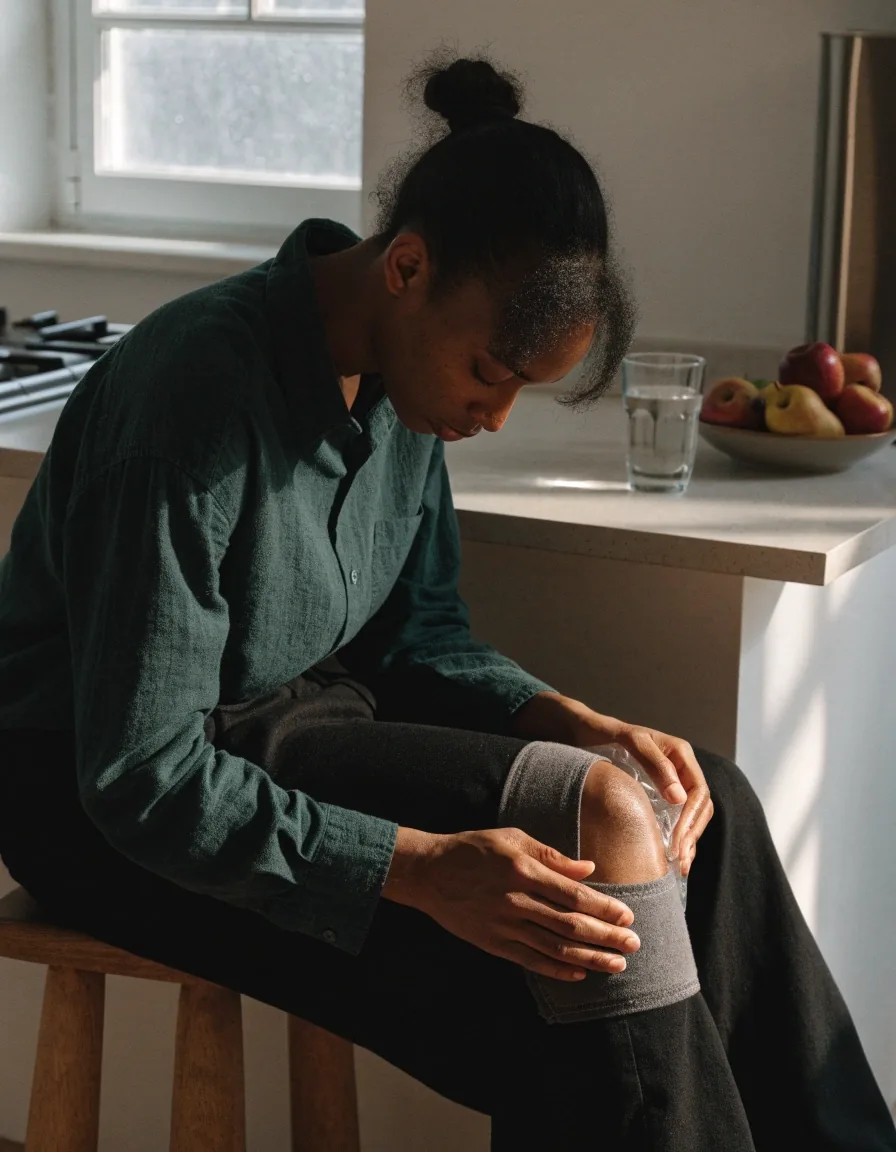
Everyday load on the knee is part of the wider picture a clinician will weigh up.
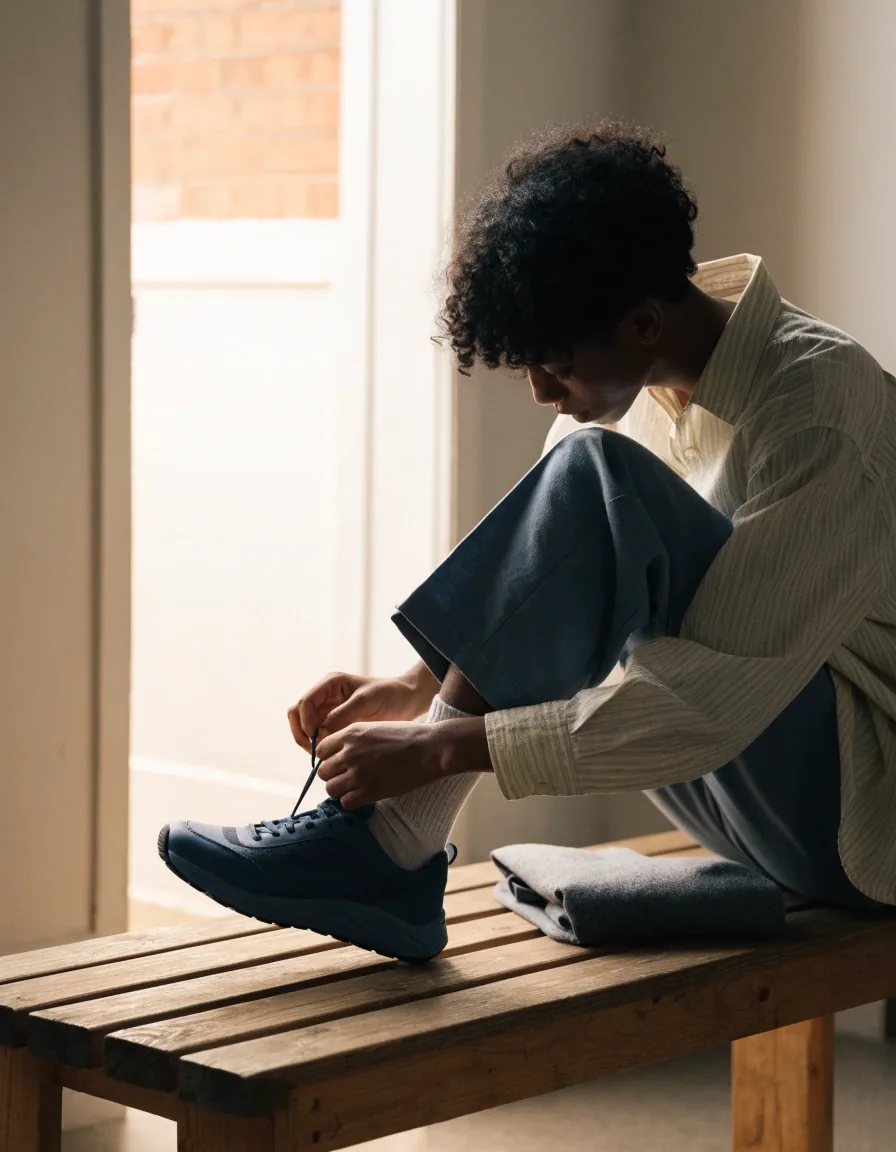
Sensible footwear and a bit of daily walking often come up in the same visit.

Family and daily routines shape what's realistic for the next few months.

Physiotherapy often comes up as the next practical step, not a referral.
Weight loss is one example that comes up: the DGFT pathway notes it for patients with a BMI over 30 kg/m2, since extra load on the knee makes a difference to comfort over time. That's a long-term factor rather than something to act on in a flare-up, and it's raised in a care setting for a reason.
Your GP or physiotherapist can also tell you whether any medication you already take is relevant, or whether a referral makes sense for your situation. This site can't do any of that, and we won't pretend otherwise. What it can do is help you ask better questions when you get there.
What to do while you wait
A short list worth holding onto between booking and being seen.
-
Keep moving, gently
Rest the knee but avoid long spells of not moving at all. Small movement breaks through the day are easier on the knee than one long walk.
-
Stay at work if you can
Keeping a normal routine matters. Steer clear of sport or heavy lifting until movement and discomfort improve, but don't write off the whole week.
-
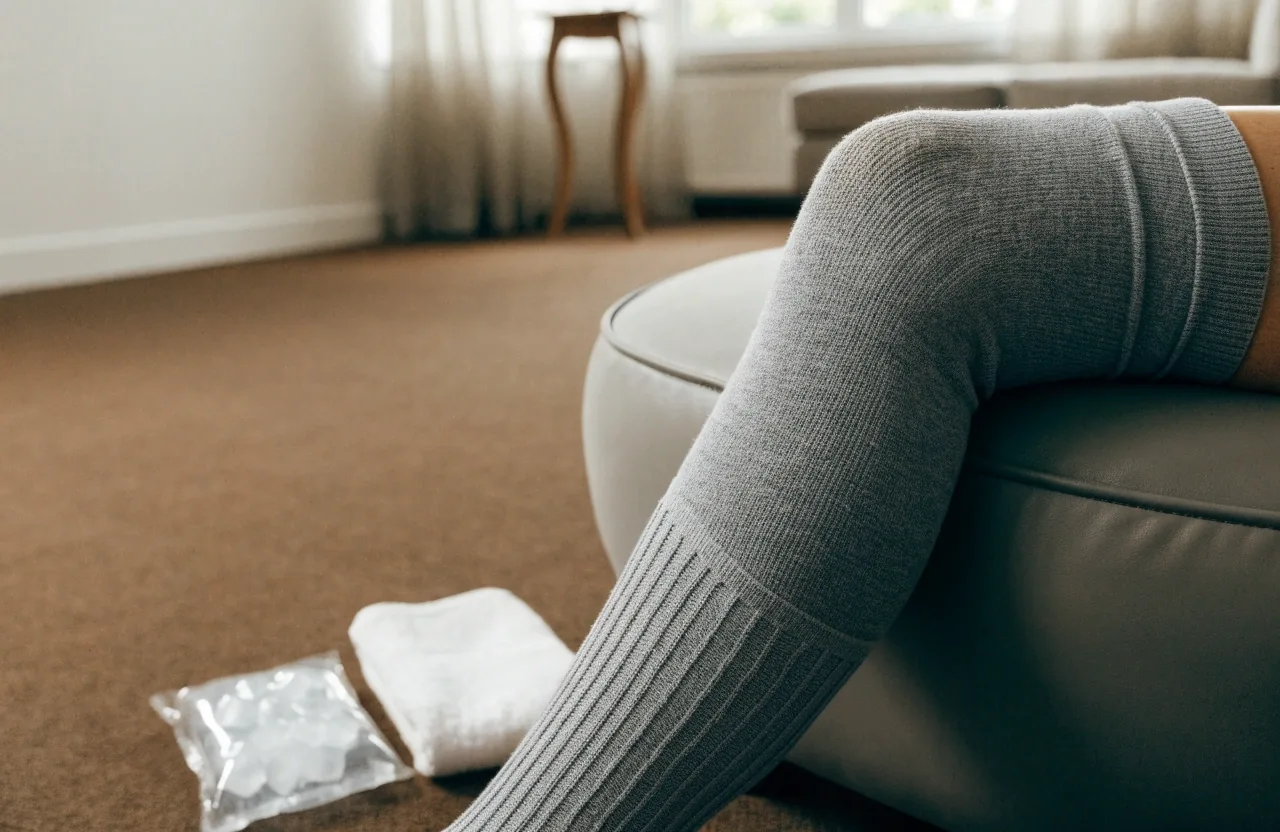
Heat or ice, up to 15 minutes
Use whichever helps, for up to 15 minutes at a time. There's no prize for pushing past that; a gentle cooling or warming through the day is the aim.
-
Wear shoes that cushion
Supportive, cushioning footwear makes a difference on hard pavements and kitchen floors. The wrong pair punishes the knee step after step.
-
Write down when it's better and when it's worse
Two or three lines a day is genuinely useful at the appointment. Note the time of day, what you were doing, and whether anything changed. None of it is dramatic, and that's rather the point.
Urgent care
When a knee needs help within the day
Severe pain after an injury, a knee that's visibly deformed, a knee that won't bear weight at all, or a sudden hot swollen joint with a fever are reasons to seek urgent help rather than wait for a routine appointment.
That applies to a minority of cases, and it's better to over-check a knee like that than to sit on it for a fortnight. For everything else, the GP route is the right one, and an appointment in the next week or two is usually soon enough.
- Severe pain after an injury
- A knee that is visibly deformed
- A knee that will not bear weight at all
- A sudden hot swollen knee with a fever
If you're unsure which route you're looking at, NHS 111 can point you in the right direction.
Questions people ask before booking
Short answers to the three things readers ask most. If yours isn't here, the contact page is the fastest route.
Send us a questionWhen should knee pain be checked by a GP?
Contact your GP if pain is getting worse rather than better, or hasn't improved after 3 to 4 weeks. See someone sooner if the knee is swollen, hot or red, if you can't put weight on it, or if it started after an injury.
Can a pharmacist help with knee discomfort?
Yes, for straightforward cases. A pharmacist can advise on heat and ice, supports, footwear basics, and over-the-counter options, and can tell you when something needs a GP instead. It's often quicker than waiting for an appointment.
What does a normal recovery timeline look like?
NHS self-care guidance says most knee pain resolves within 6 to 12 weeks without specific treatment, and flare-ups often begin to settle within 6 weeks. Slow, steady improvement is a good sign; getting worse is not.
Where to go from here
If nothing on this page sounds like your knee, the everyday routines are the better place to spend your time. If something does, contact your GP practice first. If you just want a second read on what you're seeing, our contact page is staffed Monday to Friday, 9:00 AM to 6:00 PM, and we reply to questions about the site's content rather than offering advice about your knee.
Norfolk Stride
- 18 St Giles Street, Norwich, NR2 1JN
- +44 20 7922 5945
- [email protected]
Monday to Friday, 9:00 AM to 6:00 PM