
Gentle movement and exercise
Gentle movement that keeps knees working
A knee that stops moving gets stiffer, and a stiff knee gets sore faster. That is the short version of why every UK self-care guide repeats some version of keep it moving. The difficulty is doing it without setting off the discomfort you are trying to avoid.
Start here
The rule of comfort
Work inside a range that does not hurt, and stop short of the point where it does. That is it. It sounds obvious, but plenty of people either push through soreness because they think they should, or do so little that nothing changes.
The middle ground is movement that feels like a stretch or a bit of effort, not a sharp complaint. If a bend is uncomfortable at the bottom, do not go that far. If a squat pinches, do a shallower one. You are giving the knee regular, low-level work it can recover from easily, then building from there over weeks rather than days.
Feels right
A stretch you could hold and talk through. Mild effort that fades within minutes of stopping. The same range available tomorrow.
Time to back off
A sharp catch at the bottom of the bend. Swelling afterwards. Soreness that is still there the next morning, or sorer than the day before.
Comfortable, repeated movement is one of the simplest ways to restore joint mobility and keep the knee used to daily work. It is not dramatic and it is not fast, but the alternative, doing nothing until the joint seizes up, is the harder path.
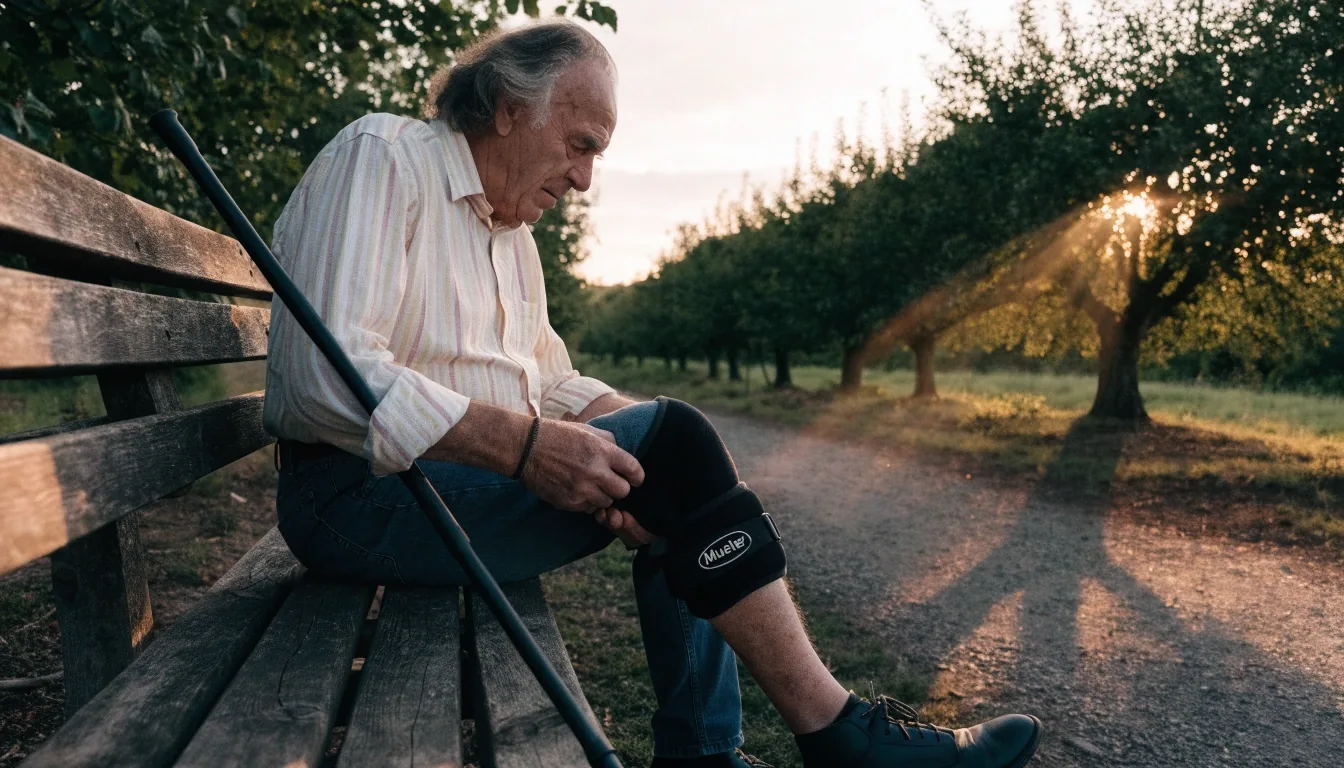
Where the routine begins
The knee does not need a gym membership. It needs a short list of movements repeated on flat ground, at a pace you could hold mid-conversation.
Straight-leg work you can do anywhere
The simplest strengthening for the leg is straightening the knee against gravity. Sit on a chair, straighten the leg out in front of you, hold for a few seconds, lower it slowly. That is a real exercise and it barely loads the knee at all.
Do five or six on each side while the kettle boils. Stand up and sit down from a chair without using your hands as you get stronger. NHS knee self-care guidance mentions squats and lunges within comfort as strengthening examples, and a chair sit-to-stand is a gentler version of the same idea. No equipment, no gym, no floor work if getting down and up is awkward.
- 1 Sit tall on a dining chair, both feet flat, back supported.
- 2 Straighten one leg until the knee is as long as it comfortably goes, toes relaxed.
- 3 Hold for three to five seconds, then lower the foot back to the floor slowly.
- 4 Repeat five or six times per leg. Add a rep only when the last one still feels easy.

A chair, a floor and five minutes. Straight-leg work keeps the front of the thigh awake without loading the knee.
Low-impact options that spare the knee
Walking on flat ground is the baseline, and for most people with a grumbly knee it is the most useful thing they can do. Swimming and cycling come up constantly because they load the knee lightly and let you control the effort. What you are avoiding is the high-impact end: running on hard ground, jumping and court sports, until the knee has settled and handled gentler work for a while.
Flat walking
Ten to twenty minutes on level pavement or a path. Build the distance before the pace.
Swimming
Water takes the weight off. Easy lengths or gentle kicking with a float both count.
Static cycling
Ten minutes at low resistance. Set the saddle so the leg nearly straightens at the bottom of the stroke.
Whatever you pick, keep the effort steady rather than daily-hard. Gentle, repeated movement supports joints day to day; a punishing session followed by a week off does not.
Movement breaks, done properly
The advice to move the knee several times every half hour while sitting is not about exercise at all. It is about not letting the knee sit in one position long enough to stiffen.
People who work at a desk all day often find this makes more difference to how they feel by evening than anything they do later on. If you forget, tie it to something regular: every time you finish a document, every time you refill the water glass.
A two-minute reset you can do at the desk
Set nothing, count nothing. Move through these once an hour and you have covered the whole idea.
Straighten the leg under the desk and hold for a count of three.
Bend and straighten the knee a few times, slowly.
Stand up and take a short walk to the window and back.
Sit back down and let the leg settle before you carry on.
Two minutes is plenty. The aim is to avoid one long, still position, not to add a workout to the middle of a working day.
Building strength without a gym
Strength around the knee changes how it handles stairs, slopes and uneven ground. The muscle that matters most is the one at the front of the thigh, and it responds to unglamorous work. Aim for two or three short sessions a week rather than one long one, and increase the repetitions slowly.
If a movement leaves the knee sore for more than a day afterwards, that is a sign you did too much, not that the exercise is wrong. Drop the reps, keep the habit, and rebuild from there.
Step-ups on the bottom stair
Step up with control, holding the rail for balance, then lower slowly. A few on each leg is a full set.
Slow sit-to-stands
From a dining chair, stand and sit without hands. Slow beats fast: take three seconds each way.
Bridging on your back
Lie down, bend both knees, lift the hips a little and lower. Comfortable on the floor only.
One-legged standing
While you brush your teeth, stand on each leg in turn with a hand on the counter for safety.
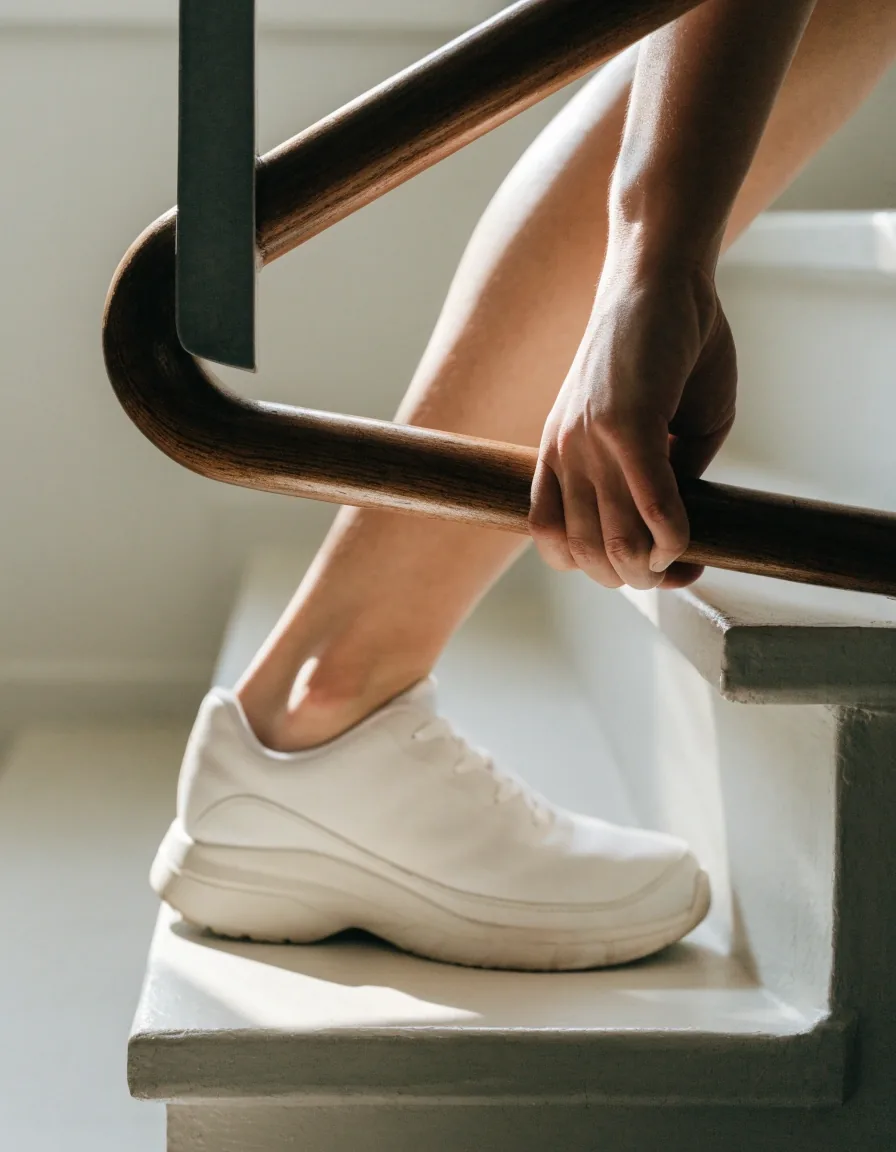
Done slowly and often, this kind of work helps restore joint strength and makes everyday movement, getting up, stepping over, walking on tarmac, noticeably less of an event.
When to back off, and when to ask
Some days the knee will protest more than others, and backing off for a day or two is sensible. What you want to avoid is the cycle of pushing hard, getting sore, resting completely for a fortnight, then starting over at square one.
If the discomfort is trending worse week on week rather than fluctuating, if the knee is swelling, or if you cannot put weight on it, pause the home routine and get it looked at.
Pause the routine and ask a professional when
- The pain is severe or keeps waking you at night.
- The knee is visibly swollen or hot to the touch.
- Movement is significantly limited compared with your normal range.
- You cannot bear weight on that leg, or the knee gives way.
Those are reasons to pause the exercises and seek advice, not to try harder. Review the full list on the When to Seek Medical Advice page, which also explains what to have ready before you call.
Questions that come up often
Straight answers to the things readers ask most about starting a gentle routine.
How often should I do these routines?
Most people do best with a short session most days, plus the two-minute movement breaks through the working day. Strength work lands well two or three times a week. The pattern matters more than any single session.
Should I push through discomfort?
No. Work up to the edge of a stretch, then stop. Sharp pain at the bottom of a bend or a pinch in a squat means you have gone too far for today. Reduce the range and continue.
What if getting down to the floor is awkward?
Skip the floor work entirely. Chair-based straight-leg raises, slow sit-to-stands and step-ups cover the same ground without the trip hazard. Add the floor only when it is easy, not when it is a struggle.
Do capsules fit into a routine like this?
Some readers pair a daily joint capsule with their movement routine as part of natural joint care and general joint pain relief. Movement does the heavy lifting; a capsule is a supporting habit for people who want one. Check the label, follow the directions and mention any supplement to your GP or pharmacist if you take other medicines.
How long before I notice anything?
Most people notice small changes in how stiff the knee feels on waking after two or three weeks of regular, gentle work. That is a fair signal. Anything faster tends to be a good day, not progress.
Where to go next
This page gives you the movement routine. The rest of Norfolk Stride fills in the pieces around it: building a comfortable base, picking support that suits your week, and knowing when to talk to a professional.
- Go back to knee comfort basics The everyday groundwork that makes movement easier.
- Compare support and comfort aids Sleeves, braces and heat, and which situations each one suits.
- Check the warning signs When to pause the routine and speak to a professional instead.
Need to reach the Norfolk Stride team? Full contact details are on the Contact page.