
About Norfolk Stride
Norfolk Stride is an independent editorial site for UK adults who want to keep their knees comfortable during ordinary life. We write about movement, footwear and support options, and we say plainly when a GP is the right call. We don't sell anything, we don't take advertising, and we don't tell you what is wrong with your knee.
Dusk walking, written down since 2024

The unhurried end of the day is where most of this actually happens.
A stick by the door, shoes that cushion, a few minutes of movement before bed. That everyday landscape is what we write about.
What we cover, and what we don't
Our pages sit in a narrow band: everyday self-care for knees and legs. Gentle movement, pacing, heat and ice, shoes, sleeves and braces, and the practical question of when a GP is the right call. We don't decide what is wrong with your knee for you, and we don't review individual supplement brands. If you need a proper assessment, that is a conversation with your GP or a physiotherapist who can actually examine the knee. We would rather be clear about that than stretch into territory we cannot help with.
The scope is deliberate, because a page that tries to answer everything tends to answer nothing well. What we can do is walk you through the routines a UK adult can start this week — a morning loosening sequence, the right pair of shoes for a gravel path, how to tell whether a sleeve is giving you enough or too much support — and keep every claim inside what published UK self-care guidance already says.
If a question needs a person who can examine you, we point you there instead of guessing. That is not a gap in the site. It is the site working as intended.
Who writes the pages
Everyone here has spent time around the practical side of knee trouble — a routine of their own, a parent they help on stairs, a stretch of waiting on a referral that took longer than it should. That is the experience the writing comes from.
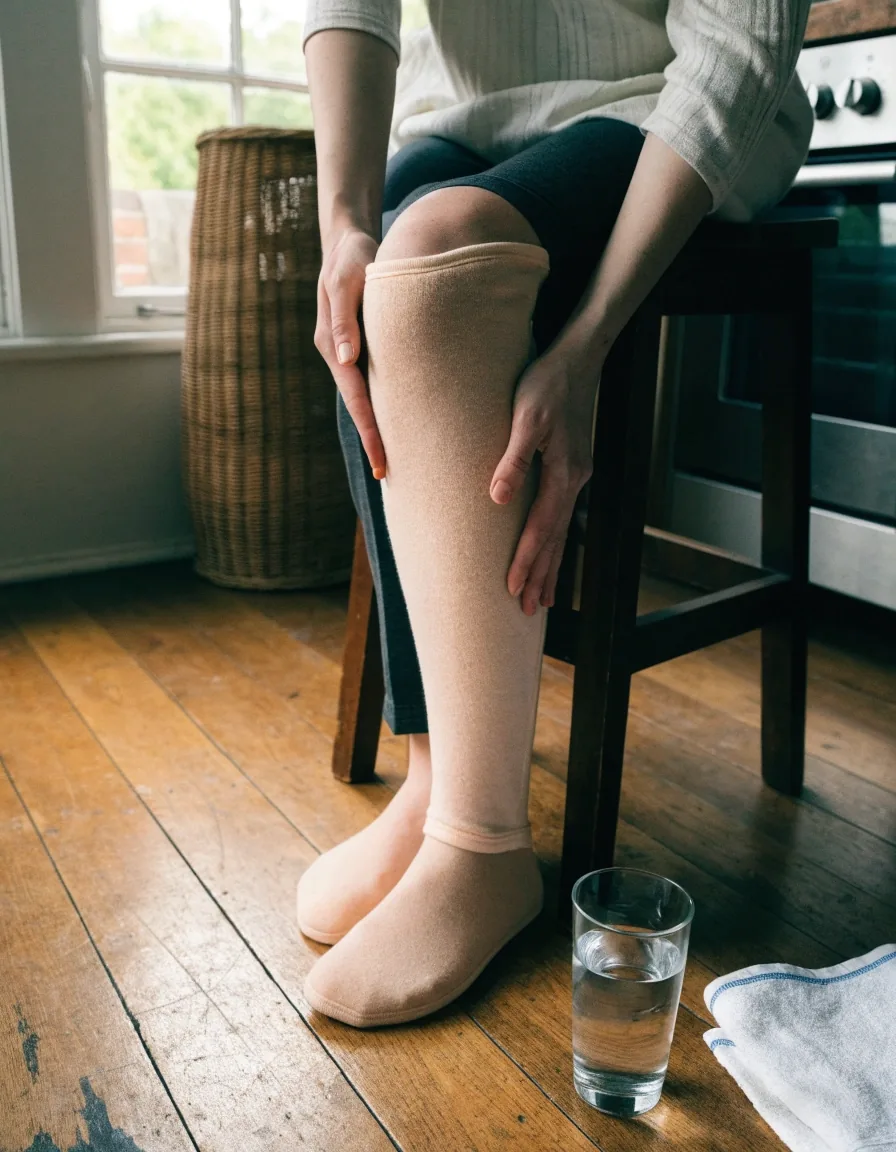
This is the kind of everyday scene the guidance is written for, not a photograph from a studio.
We are not clinicians, and we do not present ourselves as one. Where a page leans on published guidance, it is guidance anyone can read — from national self-care pages and musculoskeletal services — and we say where an idea comes from rather than dressing it up as something we discovered. When something changes in that guidance, we would rather update the page than quietly leave it out of date.
Each page names its audience plainly: an adult in the UK, on their feet, wanting to stay that way. Nothing is written for a speculative reader or a search engine first. If a sentence would not survive being read aloud to a friend who has been limping for a fortnight, it gets rewritten.
Where our reading comes from
- National self-care pages on knee and leg comfort that any UK reader can open themselves.
- Musculoskeletal service guidance published for patients, not for specialists.
- Charity material written for people managing a knee day to day at home.
- Our own notes from living with it — clearly marked as experience, never as evidence.
Why the advice stays boring on purpose
You will notice a pattern if you read a few pages: move gently, keep moving, wear shoes that cushion, know the warning signs. That is not laziness. It is what UK self-care guidance keeps repeating because it is what helps most people, most of the time.
The dramatic advice in this space — the quick fixes, the product promises, the schemes that reframe a common ache as something you can banish in a weekend — rarely survives a second look. We would rather repeat the dull things accurately than chase something more exciting and less true. If a page here ever feels like it is overselling something, that is a failure on our part, and we want to hear about it.
"Easy motion comes from a hundred unremarkable mornings, not from one clever shortcut."
Keep
moving a little, most days
Cushion
what is under your foot
Know
the signs that mean a call
How we handle sources and currency
We keep a light editorial routine and describe it plainly, so you can judge the writing yourself.



We do not cite research directly and we do not present numbers we cannot point to. Where we mention a timeframe, a warning sign or a footwear recommendation, it comes from published UK self-care or pathway guidance that a reader could find themselves. Pages get reviewed when that guidance shifts, or when something we have written turns out to be out of date.
If you spot an error, tell us through the contact page — it is the fastest route. Corrections are welcome, and we would rather fix a page than defend it.
Written
Plain pages a UK adult can act on this week.
Checked
Re-read against published self-care guidance.
Corrected
Reader notes fold straight back into the page.
What we do with reader questions
Questions sent through the contact form shape what gets written next, even when we cannot answer them one by one.
- Repeat questions If several people ask the same thing — how to tell a sleeve from a brace, whether a walking stick is worth it — that is a signal the page is not clear enough, and it gets rewritten.
- Personal asks We cannot assess an individual knee in writing, and we say so plainly rather than guess. A GP or physiotherapist who can examine you is the right route for anything specific.
- Shared parts What we can do is turn the shared parts of those questions into better pages. That is the whole point of a resource like this one.
- Corrections Spotted a mistake in a routine, a shoe note or a warning-sign list? Send it. A corrected page is worth more to the next reader than a defended one.
No products, no affiliate links
We sell nothing and we earn nothing from links. Where we mention a brand — a sports support sold in UK shops, a plaster you would find in a supermarket — it is because it is part of the everyday landscape people already recognise, not because we are promoting it.
That leaves our only job as being accurate. It also means we can tell you when something is not worth buying, which a shop with a vested interest in the sale probably would not.
What that means for you
- No sponsored placements, no paid rankings, no brand deals behind a recommendation.
- Sleeves, braces, shoes and heat packs are discussed as everyday options, with their limits stated.
- If a gadget is unlikely to help you, that is what the page will say.
- When we point at another site, it is there to read, not to buy from.
Contact
Reach the editors
We read every message that comes in. Corrections move fastest; general questions about routines, footwear or support options usually get a reply within a couple of working days.
-
Email
-
Phone
+44 20 7922 5945
-
Where to write from
18 St Giles Street, Norwich, NR2 1JN, United Kingdom. Office hours are Monday to Friday, 9:00 AM to 6:00 PM.
The limits of general guidance
Everything on Norfolk Stride is written for a general UK adult audience. It cannot account for your history, your other conditions, or anything specific to your knee that a professional would pick up in a consultation. Please treat it as background reading rather than a plan.
If something you read here conflicts with advice from your GP, pharmacist or physiotherapist, follow them. They can see your knee. We cannot. That single sentence is the honest boundary of a site like this one, and it is why we keep the writing narrow and the promises small.