
Everyday habits that keep knees comfortable
Most of the advice that helps a grumbly knee is small and repeatable. It isn't a programme you finish — it's a handful of habits that fit around work, the school run, or a day on your feet.
This page covers the everyday habits that show up again and again in UK self-care guidance: movement breaks, heat and ice, and shoes that don't fight you. None of it needs special kit, and none of it needs a cleared afternoon. What matters is repetition — the small interruptions that keep a knee from seizing up during a long drive, a full day at a desk, or a cold walk home.
You don't need all of it at once, and you don't need to get it right on the first try. Read the section that matches what's bothering you most, try it for a fortnight, and see whether the first twenty minutes of your morning feel any easier.
The first habit
Breaking up long sits
Sitting still for a long stretch is one of the most common ways a knee stiffens up. Herefordshire and Worcestershire NHS knee guidance suggests gentle leg movement several times every half hour if you're sitting for long periods. That isn't a workout. It's straightening the leg under the desk, a few slow bends, standing up to make tea.
If you work from home or drive for a living, set a timer for the first week until the breaks start happening on their own. The point is to interrupt stillness, not to add exercise you don't have time for. People who keep it up consistently tend to notice it most on getting up, when the knee moves a little more freely than before.
Two breaks an hour is a realistic target to aim for, and it holds up whether you're in an office, in a car, or on the sofa. Support joints daily is the idea — a small amount often, rather than one big push when you remember.
The second habit
Moving a bit, most days
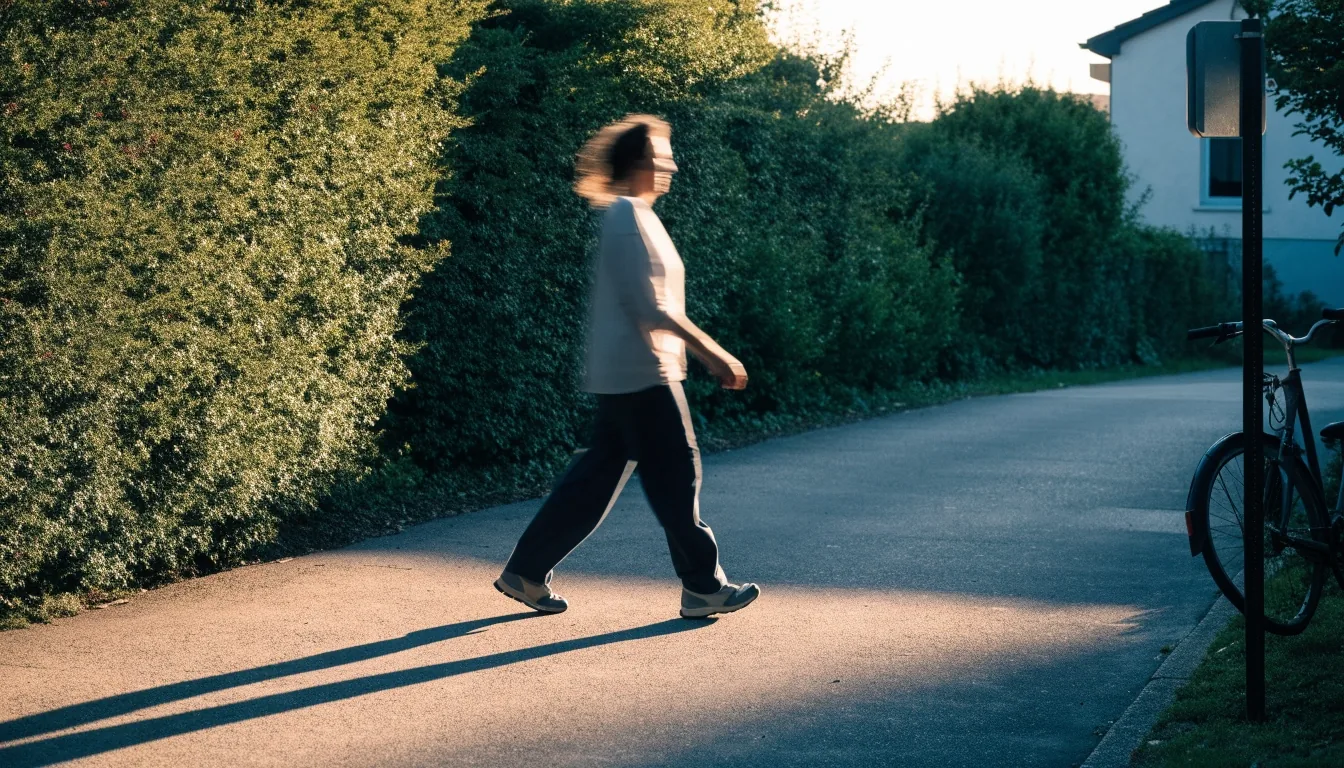
The other half of the same idea is getting some walking in. Guidance from Arthritis UK includes gentle movement every hour while you're awake. That sounds like a lot until you realise it means small amounts spread out: a ten-minute walk after lunch, taking the longer route to the shop, getting off the bus a stop early.
Easy motion is the goal here, not mileage. What you're steering away from is the pattern of a completely still day followed by a two-hour walk at the weekend — exactly the kind of spike that leaves a knee sore on Sunday evening and quiet by Tuesday.
If you already know your knee complains after a long walk, split that walk in two on consecutive days. If you drive a lot, walk the first five minutes of your lunch break before you eat. Neither change needs a gym or cleared time — both keep the joint used to bending without asking too much of it in one stretch.
Worth doing this week
- Ten minutes walking after lunch, most days.
- One stop earlier off the bus on the way home.
- Two shorter walks instead of one long one.
Give it a fortnight before deciding whether it helps.
The third habit
Heat or ice, and choosing between them
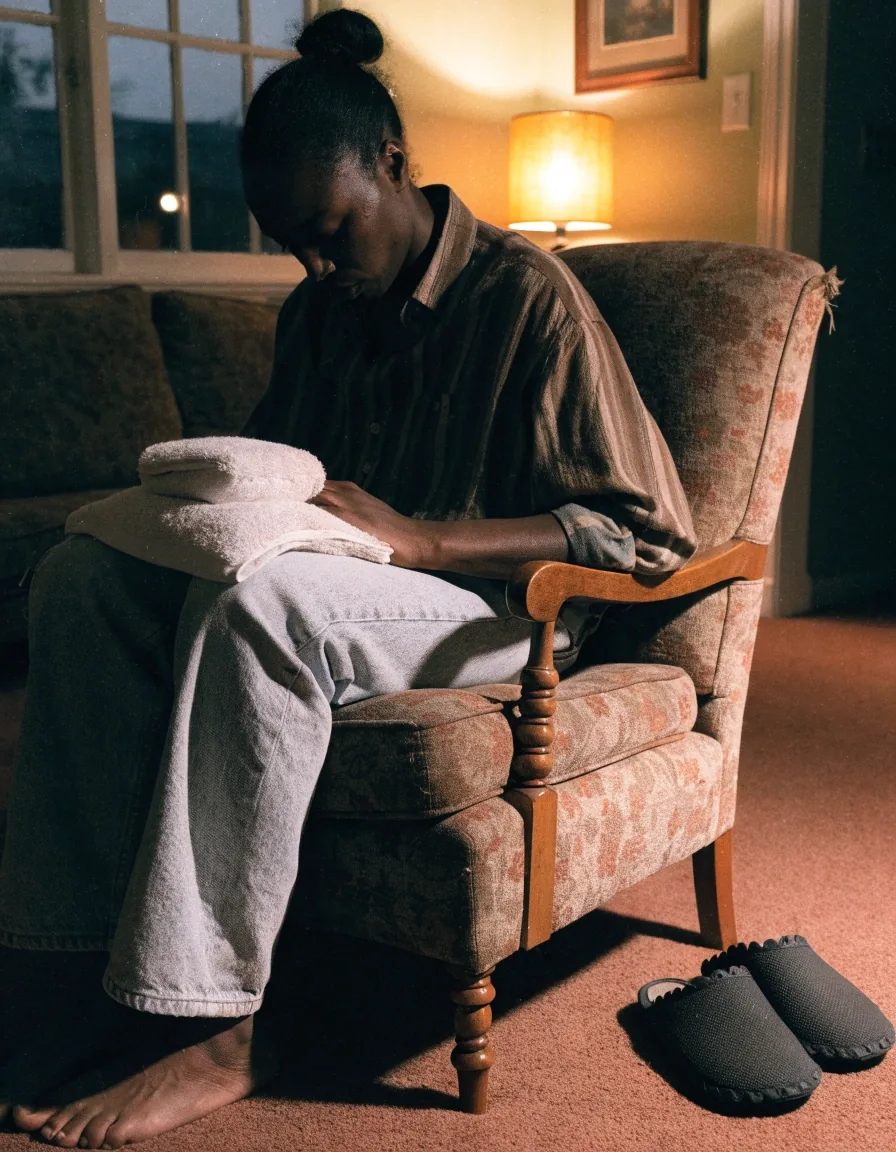
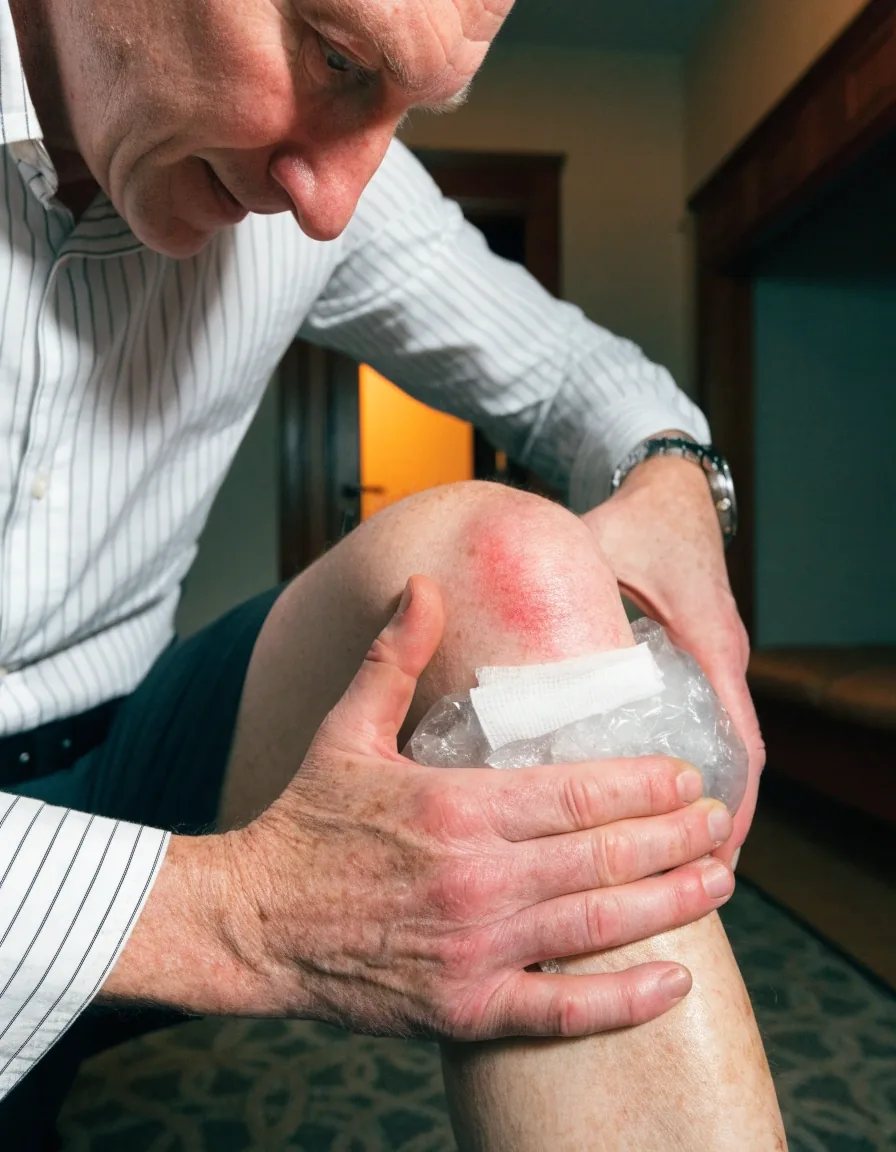
Both are simple, both are cheap, and they do different jobs. UHCW's self-care page recommends either for up to 15 minutes at a time. Wrap the pack in a thin towel, don't lie on it, and leave at least an hour between rounds.
Reach for heat
- When the knee is stiff and tight.
- First thing in the morning, before you ask anything of it.
- After a cold walk, when everything feels slower than usual.
Reach for ice
- When the knee is puffy, or warm to touch.
- When it is sore after a long day on your feet.
- When you have already been standing more than usual.
If neither seems to help after a couple of weeks, that's worth mentioning to a pharmacist or GP rather than something to keep pushing.
The fourth habit
Keeping the knee warm on cold mornings
Norfolk mornings in winter are not kind to stiff knees. Low temperatures make everything feel tighter, and a knee that is slow to loosen first thing often behaves better if you warm it up before you ask anything of it. That can mean a warm shower, a heat pack, or just a few minutes of easy bending before you head out.
A compression sleeve does part of the same job by holding warmth around the knee, which is a good reason to wear one on a cold walk rather than reaching for it only when something hurts. None of this replaces movement. It just makes the first twenty minutes of the day easier than they would otherwise be.
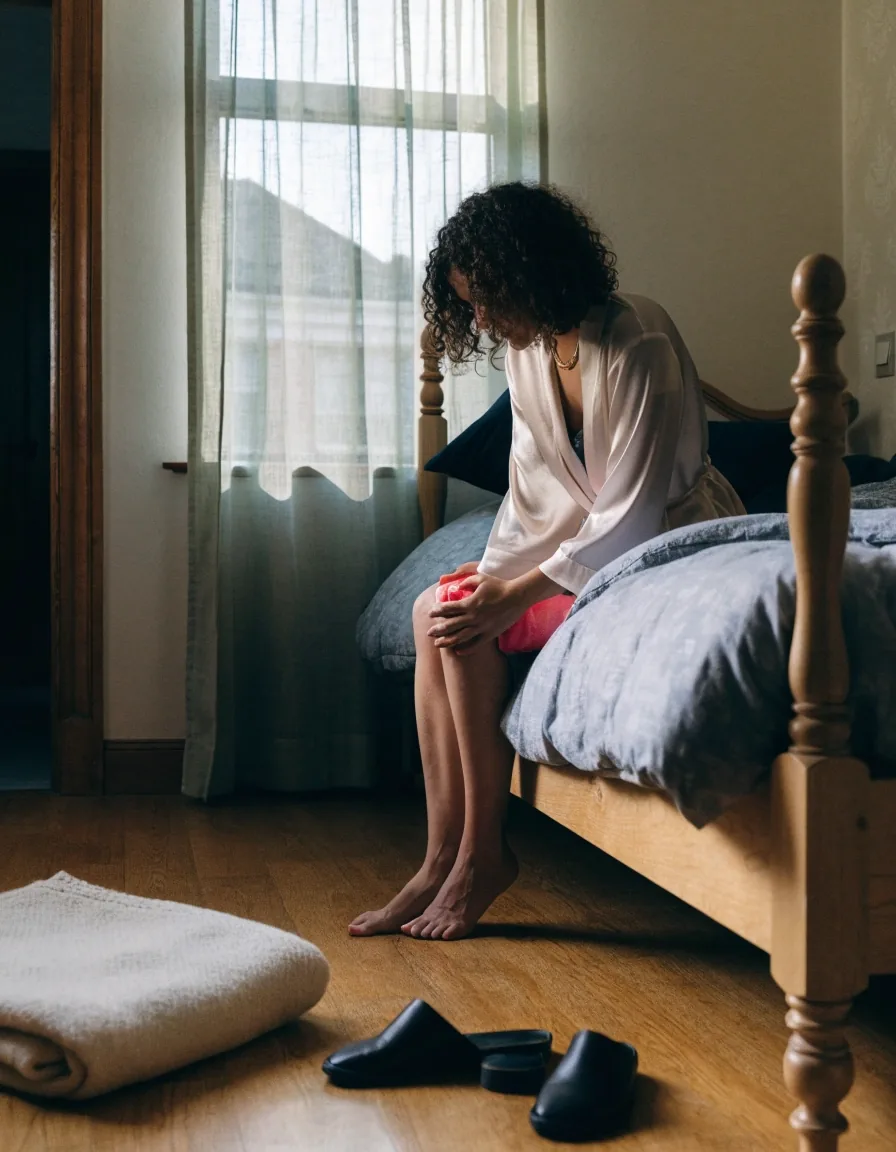
Warm the knee before you dress, not after the walk.
Supportive footwear, in plain terms
Shoes are the most overlooked piece of knee comfort, and they are also the easiest to fix without changing a single habit elsewhere in your day.
What the guidance says
The Herefordshire and Worcestershire guidance is specific: sensible, well-fitting, soft-soled shoes with low heels. In practice that means a shoe with some cushioning under the ball of the foot, a heel that hasn't worn unevenly, and enough room that your toes aren't cramped.
What to avoid
Shoes that are too flat and hard, like a thin-soled plimsoll, pass every jolt straight up the leg. Very high or unstable heels change how the knee tracks. If you walk on hard pavements regularly, the midsole wears out first, and a shoe that looks fine on top can be doing nothing for you underneath.
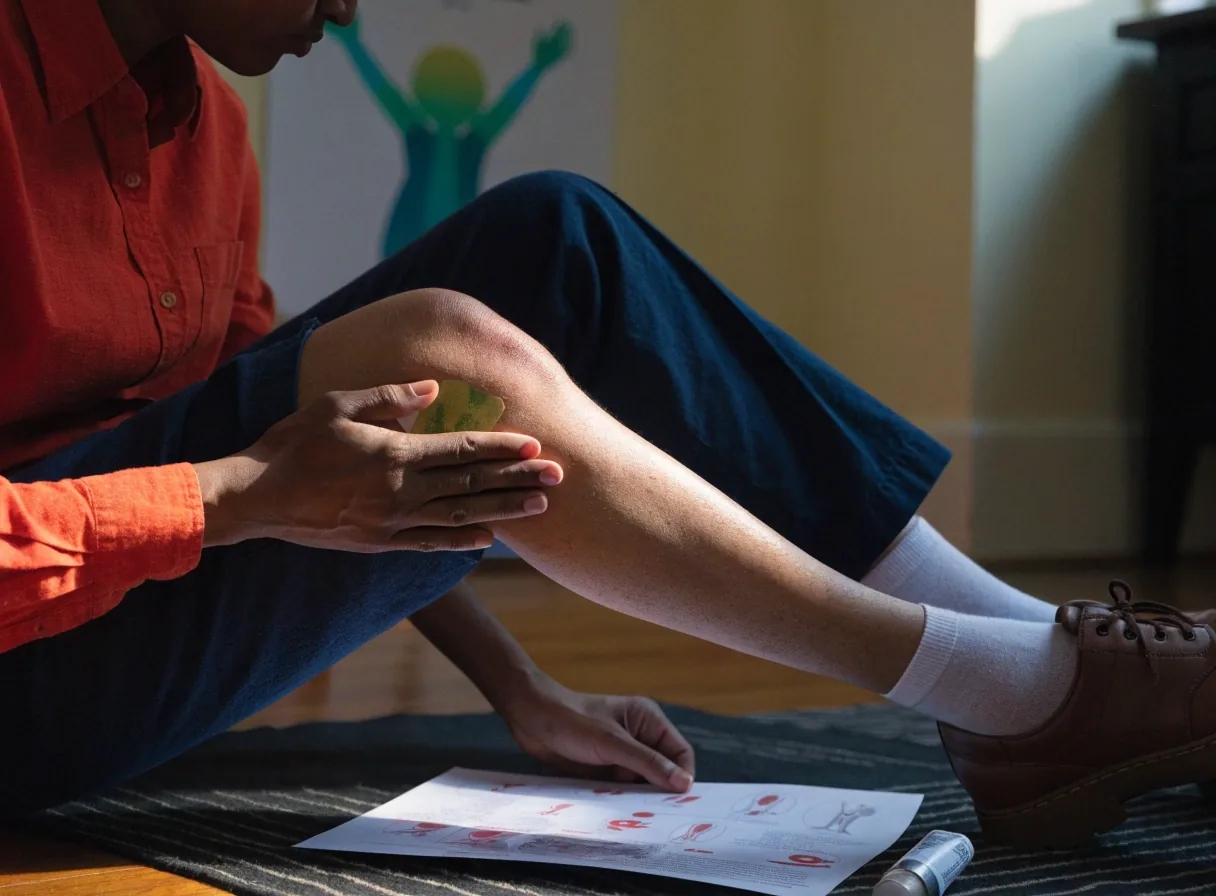
Check the midsole under the ball of the foot first — it gives out before the upper does.
When it flares
Pacing a rough patch without stopping entirely
When a knee is angry, the instinct is to do nothing until it settles. Complete rest for long periods is exactly what the guidance warns against, partly because the knee gets stiffer and weaker in the meantime. What works better is scaling down rather than stopping.
Shorter walks, fewer stairs, no heavy lifting or sport until things ease, and still the small movements that keep the knee used to bending. NHS TIMS advice notes that staying at or returning to work is worth doing where possible, because keeping a normal routine matters. Adapt how you do things rather than pulling out of them completely.
Use a week as a rough marker. If a knee is no easier by then, or if it is swelling, locking or failing under you, that is a reason to speak to a pharmacist or GP rather than waiting it out. Fast pain relief is not something this page can promise; what it can do is show you a sensible way to keep moving while you decide what is right next.
Hanging habits on what you already do
Building it into a normal week
You don't need a separate routine carved out of your day. Attach the habits to things you already do, and they last longer than ones that need motivation every time.
Common questions
Small things people ask before they start
Answers to the questions that come up most when visitors are deciding which habit to try first.
Do I need to do all of it at once?
No. Pick the one habit that matches what's bothering you most this week and leave the rest. Most of the value comes from doing one thing often rather than four things sporadically.
How long before I notice anything?
People who keep movement breaks up often notice a difference getting out of a chair within a week or two. Footwear changes can surprise you on the first long walk and then confirm themselves over a fortnight of regular use.
Should I wear a compression sleeve every day?
Not necessarily. A sleeve is most useful on cold walks, long drives and days when you know you'll be on your feet more than usual — warmth and a little gentle support, not a daily uniform. If you are unsure whether it is right for you, ask a pharmacist.
Where do joint capsules and other supplements fit in?
Joint capsules and natural joint care products are sold as dietary supplements, not medicines. They are not a substitute for the everyday habits on this page, and they are not a knee pain solution on their own. If you are considering one, read the label properly, follow the stated serving and speak to a pharmacist about whether it is suitable alongside anything else you take.
When should I speak to someone instead of self-managing?
If a knee is swelling, locking, giving way, or getting worse rather than better over a couple of weeks, arrange a conversation with your GP or a pharmacist. The guidance on this page is for everyday comfort, not for deciding what a persistent problem means.
Where to go next
Pick one habit, try it for a fortnight, then decide
Give it a few weeks and see which of these you'd miss. If you'd rather start with a guided routine, the gentle movement page has simple movement-by-movement sequences built for stiff mornings. If the practical kit matters more to you, the support and comfort aids page walks through what is worth having by the door.
Questions about what fits your week? Write to Norfolk Stride, or call +44 20 7922 5945 between 9:00 AM and 6:00 PM, Monday to Friday.
Habits that hang off existing routines last longer than ones that need motivating every time.
Prefer to read one more page first