
Choosing between sleeves, braces and aids
Walk into any UK sports shop and you will find a wall of knee supports with similar packaging and very different jobs. This page is a plain comparison of what each type actually is, who tends to find it useful, and how to tell whether it is helping or just adding pressure.
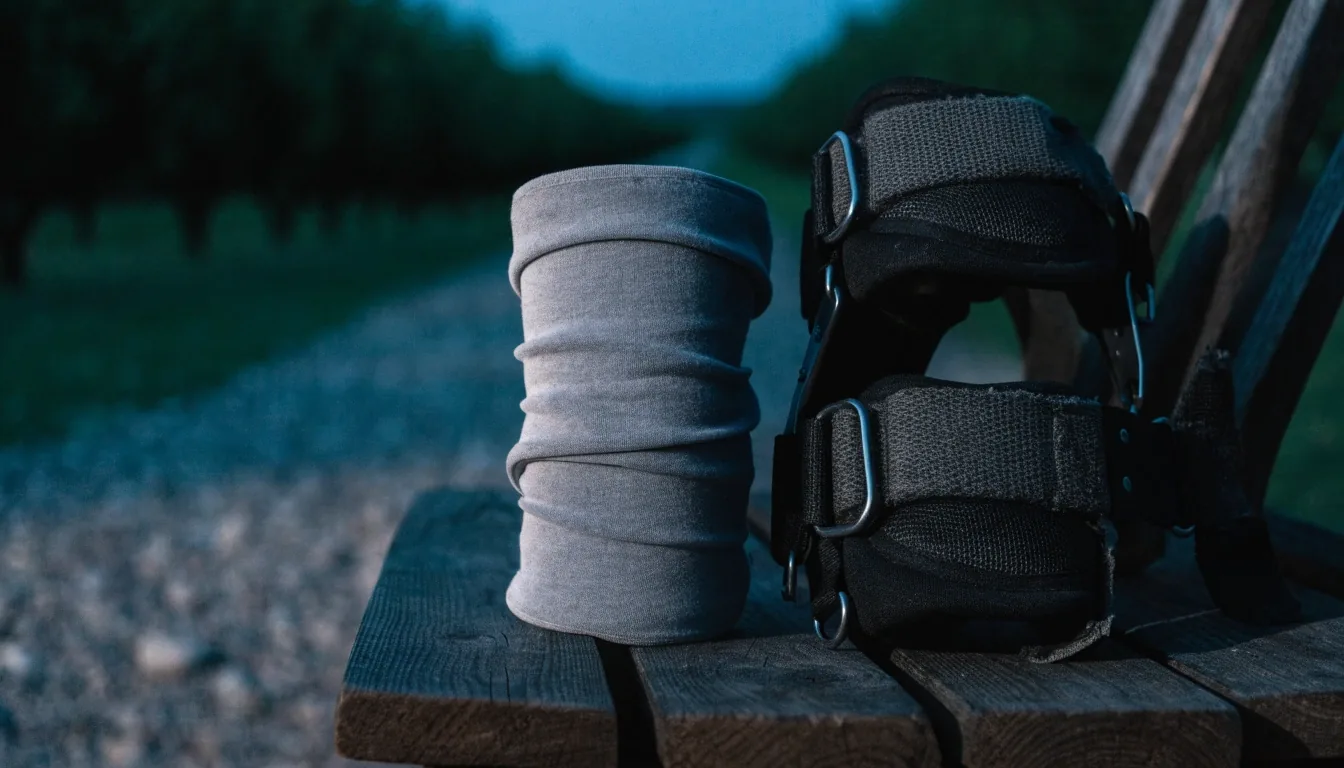
Two supports that look alike and work differently
Nothing on this page is a recommendation for your knee in particular, and none of these products fix anything on their own. What follows is what each type is, what it does, and the honest test for whether it earns the money.
What a compression sleeve does
A sleeve is a tube of stretchy fabric that goes over the knee. It adds warmth, mild compression and a bit of feedback about where the joint is. That is mostly it. People tend to reach for one for a stiff knee on a cold morning, or for a long walk where the knee usually starts grumbling.
Brands like Mueller have sold compression-style supports through ordinary UK retail for years, and they are popular with active users for exactly this low-key role. A sleeve should not feel tight enough to leave marks or restrict the bend. If it does, it is the wrong size, not a sign you need a stronger one.
Easy to check in the shop: put it on, bend the knee fully, and walk twenty steps. Marks on the skin afterwards mean the size is wrong.
What a braced support adds
A brace is a step up in structure. Some have hinges at the sides, some have straps that adjust the amount of support, and some are shaped to limit how far the knee bends. They are generally chosen when the knee feels unstable rather than simply sore, or when someone is returning to an activity and wants more reassurance than a sleeve gives.
The trade-off is bulk and warmth. A brace is warmer to wear, takes longer to put on, and can be awkward under trousers. If you are not sure you need one, a sleeve is the cheaper thing to try first. Speak to a physiotherapist if you are choosing a hinged brace for a specific problem.
Where a braced support starts to earn its place: uneven ground, longer distances, and the weeks when the knee feels less predictable than usual.
Straps, plasters and the small stuff
Not every aid is a joint support. A patella strap sits below the kneecap and is worn by some people for a specific spot of discomfort, usually during activity rather than all day. Then there is the comfort side of things: friction and rubbing rather than the knee itself.
Patella strap
A narrow band that sits just under the kneecap. Worn for activity, not all day. Useful when one spot complains on steps and hills rather than the whole knee.
Blister plaster
Compeed blister plasters are a familiar UK product used for cushioning. If a long walk is producing rubbing somewhere, that is an easy problem to solve before it spoils the route.
Cushioned insole
Changes how much shock reaches the knee on hard pavements. A boring, effective aid for anyone who walks on tarmac rather than grass most days.
It is worth separating these two things in your head. One is about the knee, the other is about everything around it that can make a walk unpleasant.
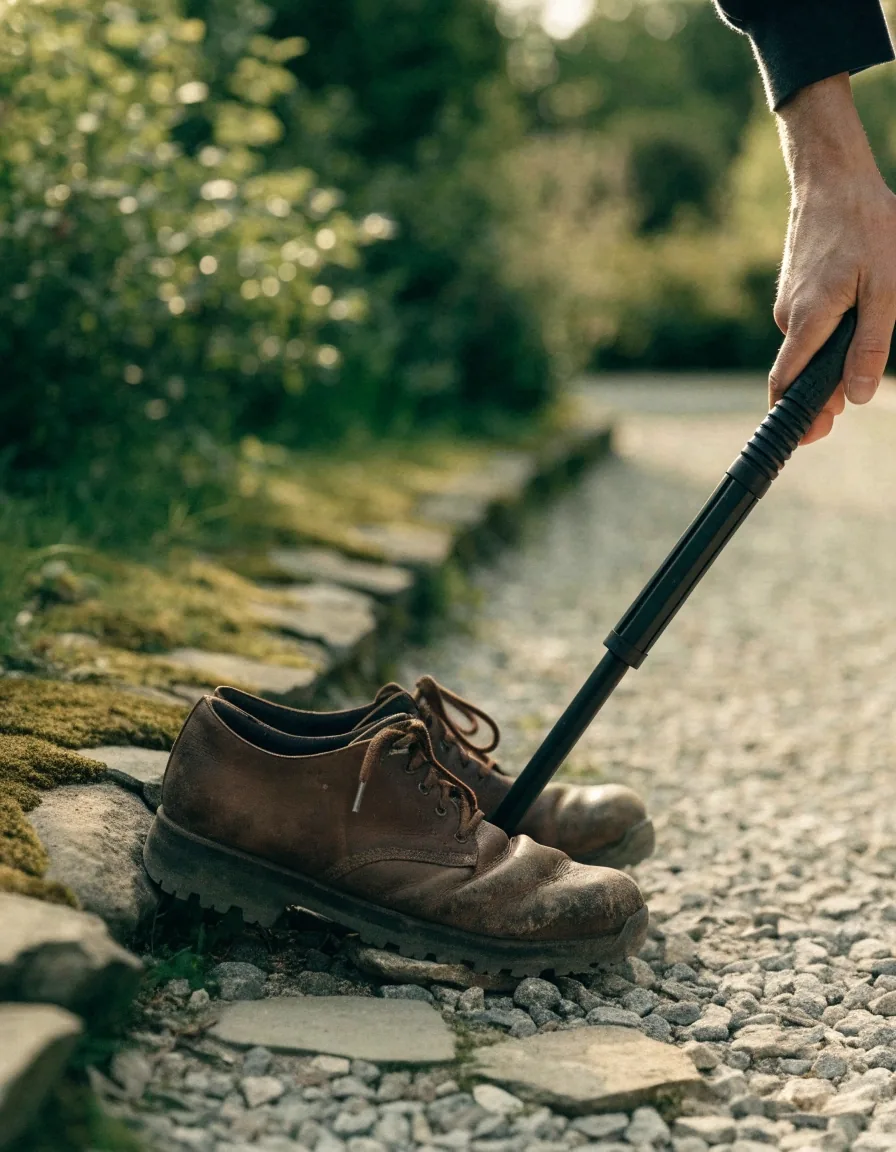
A stick used occasionally for longer walks is a practical tool, not a milestone.
Walking aids, honestly
A walking stick or a pair of poles is not a last resort. For someone whose knee flares up after a long day on their feet, a stick takes load off the leg and lets them keep walking distances they would otherwise avoid. That matters, because the guidance for knee trouble leans heavily on keeping normal routine and staying mobile.
Getting the height right
- Stand upright and let your arm hang. The handle should sit around the crease of your wrist.
- Hold it in the opposite hand to the sore knee, so the stick moves with the stronger side.
- If you are not sure, a pharmacist can check it with you in a couple of minutes.
Comfort accessories people already know
The most useful aids are often the boring ones. None of these are marketed as anything special, and that is partly why they work: people actually use them.
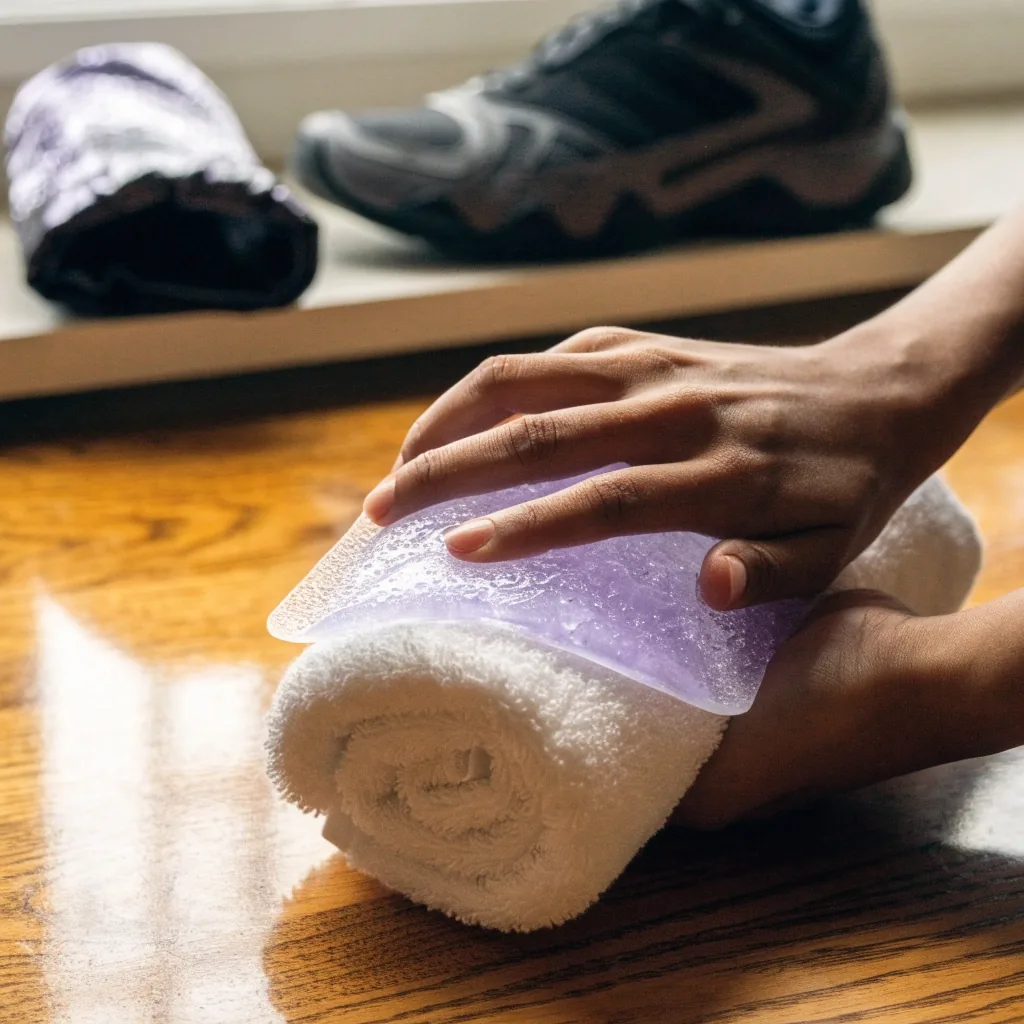
A flexible ice pack wraps around a knee far better than a rigid one.

A heat pack you can microwave gets used more often than one that needs a plug.
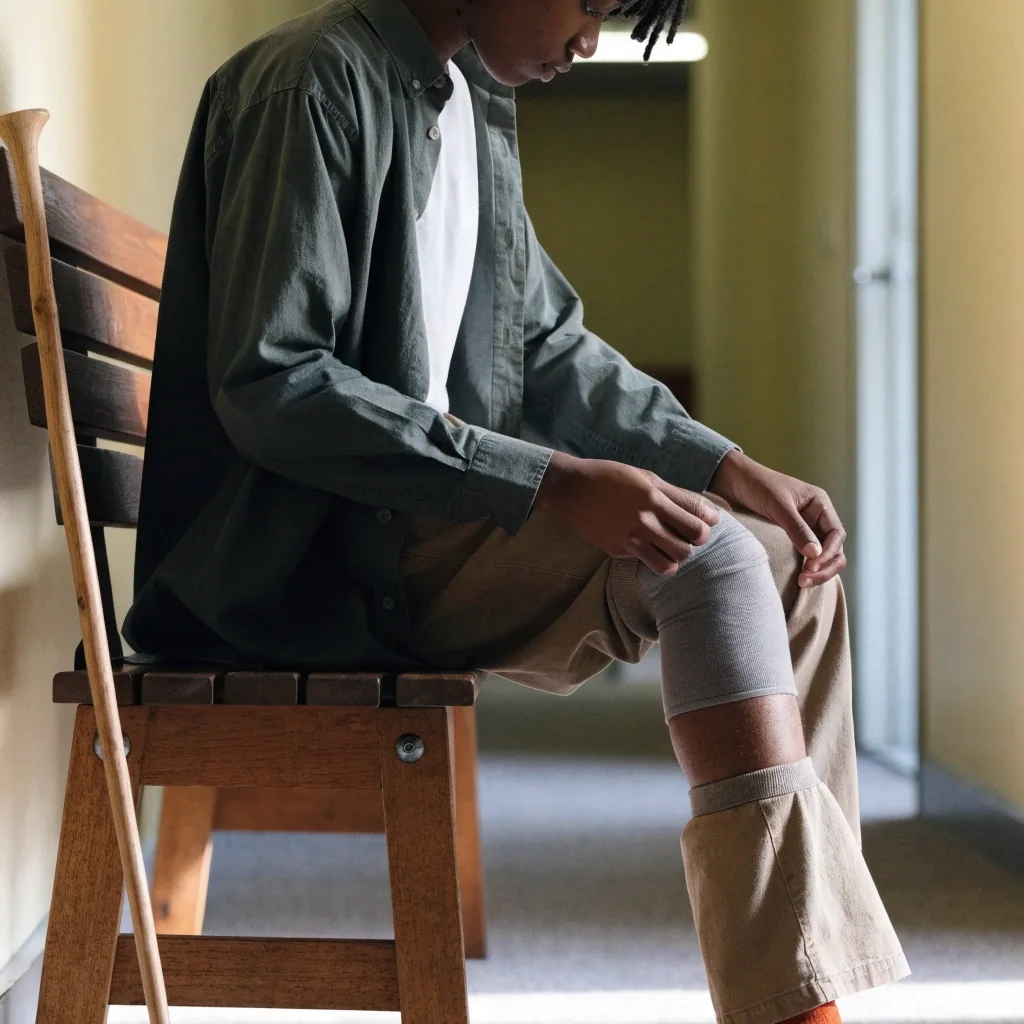
A well-cushioned insole changes how much shock reaches the knee on hard pavements.
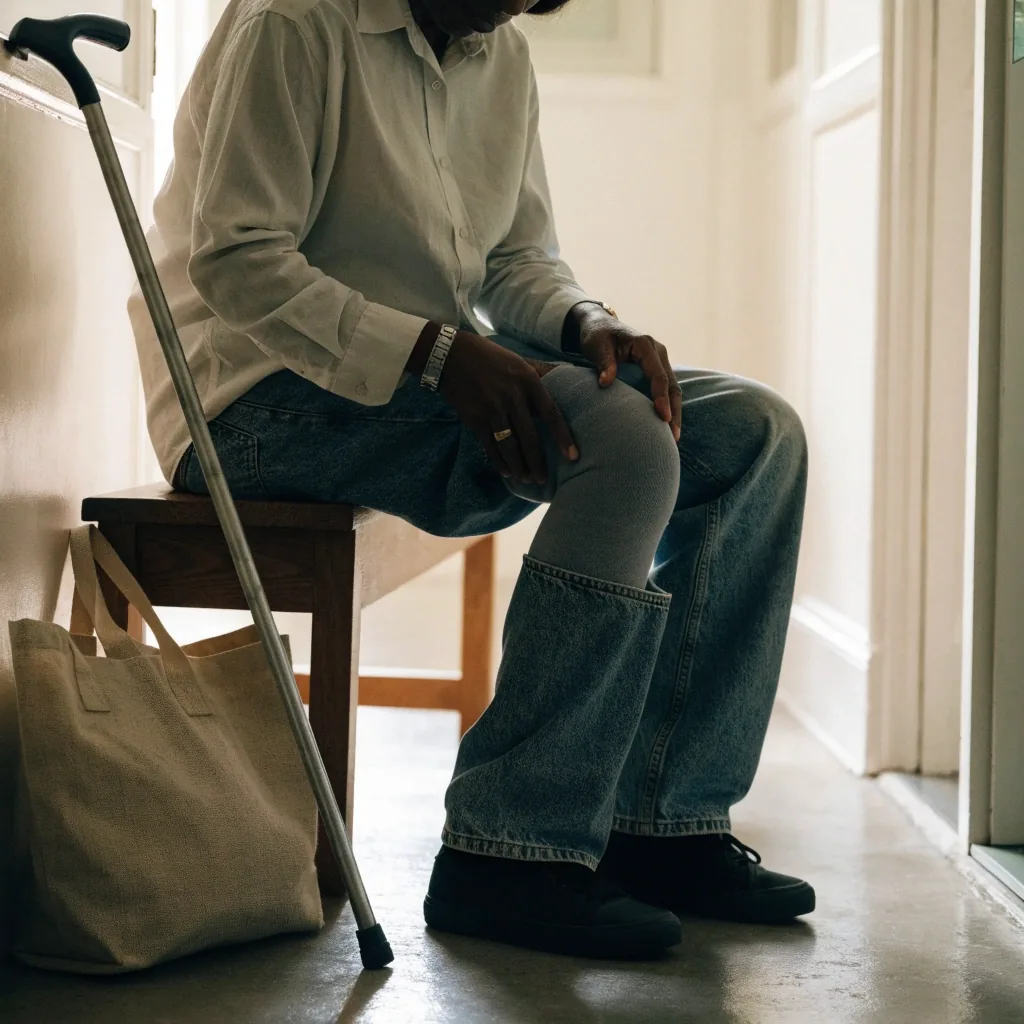
A folding stick lives in a bag so it is there when a walk turns out longer than planned.
How to tell if a support is helping
The honest test is whether your knee does more, or feels better afterwards, when you wear it. If you walk further with it on and you are no more sore the next day, it is doing something. If nothing changes except that your leg is warmer, it may not be worth the money.
If it hurts, or you need it all day every day, that is a reason to talk to a GP or physiotherapist rather than buy a different one. Supports are meant to help you do more of the things that help, not to replace them.
Sign it is working
You go further, or the same distance feels easier, and the next morning is no worse than usual.
Sign it is not
Nothing changes except the warmth, or the support only feels right when it is tighter than is comfortable.
When to get it looked at
It hurts while you wear it, or you reach for it every single day without it changing anything.
Questions people ask before they buy
Sleeve or brace first?
Start with a sleeve. It costs less, packs flat, and is easy to wear on a normal day. Move towards a braced support only if the knee feels unpredictable rather than just sore — and if you are choosing a hinged one for a specific problem, get a physiotherapist to look at the fit with you.
How tight should a support feel?
Snug, settled, and forgettable after ten minutes. If it leaves marks, pinches behind the knee or stops the bend, it is the wrong size. Bigger is almost always better than smaller here, and most UK shops will let you try before you buy.
Can I wear one all day?
A sleeve, yes, if it stays comfortable. A braced support, usually only for the hours you need it. Needing maximum support every waking hour is a signal to have the knee looked at rather than to tighten the straps further.
Do these products replace anything else?
No. A strap, sleeve or stick is a helper for staying on your feet. The routine around it — gentle movement, sensible footwear, warm-ups before you head out — is what does the long work. Supports buy you the comfort to keep going while that routine settles in.
Where to go next
Pick one thing to change this week. If a sleeve is new to you, size it in a shop rather than online. If a stick is new, get the height checked. If you would rather start with movement, the routines page is the softer way in.